The Quiet Power of a Weekend Away
Not every trip needs a passport, a carefully optimized itinerary, or two weeks of annual leave.
Sometimes you need one small bag, somewhere different to sleep, and forty-eight hours in which nobody expects you to empty the dishwasher.
A weekend away can seem almost too short to count as real travel. You leave on Friday afternoon and, before you have completely figured out where everything is, Sunday is already approaching. There is no time to properly settle in. You probably will not see everything. You may spend almost as much time getting there as you do being there.
And yet a short trip can reset something that a normal weekend at home rarely touches.
Maybe that is precisely because it is short. You do not have enough time to postpone things until tomorrow. You pay attention. You walk farther. Meals become occasions. Morning feels different simply because you opened your eyes somewhere unfamiliar.
Sometimes two days away can feel longer than two weeks at home.
You Don’t Have to Go Far to Feel Far Away
We often imagine travel in terms of distance. The farther we go, the more significant the trip must be.
But the mind does not necessarily measure distance in kilometers.
A town ninety minutes away can feel surprisingly removed from everyday life if the streets look different, the landscape changes, or nobody there knows what your Monday morning looks like.
You do not need to cross an ocean to experience the psychological shift of being somewhere else. Sometimes crossing a mountain range, taking a train to another city, or driving until the architecture changes is enough.
The best weekend destinations are not always the most impressive ones. They are the places close enough that getting there does not consume the trip but different enough that arriving feels like an event.
Leaving Interrupts the Routine
At home, weekends have a tendency to become maintenance periods.
There is laundry to do. Groceries to buy. Things to clean. Emails you did not answer during the week. A cupboard you have been meaning to organize for approximately seven months.
You wake on Saturday imagining an empty day and somehow spend it catching up on life.
Going away interrupts that machinery.
You cannot reorganize the cupboard because the cupboard is two hundred kilometers away. The washing can wait. The half-finished task on your desk stays on your desk.
For a brief period, your surroundings stop reminding you of everything you could be doing.
That physical distance creates mental distance too.
New Places Make Time Feel Slower
Routine compresses time.
Think about an ordinary Saturday from three months ago. Unless something unusual happened, much of it has probably disappeared from memory.
Now think about a weekend trip you took years ago. You may still remember the hotel room, what you ordered for dinner, the street you walked down after breakfast, or the ridiculous argument about which direction the train station was.
Novelty gives the brain more landmarks.
When everything around you is familiar, the day can pass almost automatically. Somewhere new, you pay attention because you have to. You notice buildings, menus, signs, people, smells, weather, and directions.
A weekend still contains the same number of hours.
It simply feels as though you were present for more of them.
You Pack Differently for Two Days
There is something liberating about traveling with almost nothing.
For a longer trip, packing can become a logistical exercise. You prepare for different weather, different occasions, different possibilities, and the apparently very real chance that your destination has never heard of toothpaste.
A weekend bag forces decisions.
Two outfits. Comfortable shoes. Toiletries. Charger. Done.
Travel becomes lighter when you are not dragging half your possessions behind you. You arrive faster, leave faster, and spend less time managing things.
There is also a quiet reminder hidden in traveling light: we require remarkably little to live comfortably for a couple of days.
You Stop Saving Everything for “Next Time”
Long trips encourage procrastination.
We can visit that museum tomorrow. Try that restaurant later. Walk to that neighborhood another day.
A weekend gives you no such luxury.
If you want to see the view, you go. If the weather is good, you walk now. If the restaurant looks interesting, you make the reservation.
Limited time creates decisiveness.
That does not mean turning forty-eight hours into an endurance event of attractions and reservations. In fact, the best weekends often involve doing less. But whatever you choose tends to feel deliberate because there simply is not enough time for endless indecision.
Breakfast Suddenly Becomes an Event
At home, breakfast can be functional. Coffee. Toast. Something eaten while checking the time.
Away, breakfast becomes part of the trip.
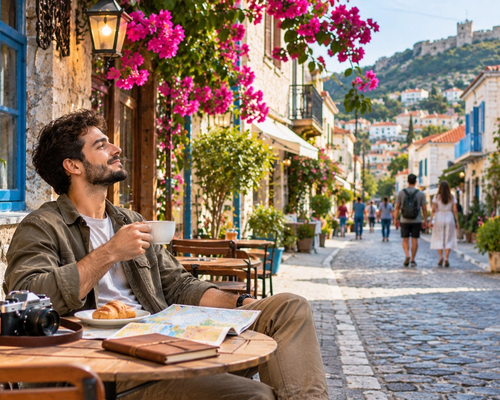
You find a bakery. Sit somewhere you have never sat before. Order something you would not normally make at home. Drink coffee slowly because there is nowhere particularly urgent to be.
The same transformation happens to ordinary activities.
A walk becomes exploring. Buying bread becomes visiting a market. Sitting outside becomes people-watching. Taking the train becomes part of the story.
Travel does not necessarily give us more interesting things to do. Sometimes it simply makes ordinary things interesting again.
A Weekend Away Can Change a Relationship
Travel reveals people in ways ordinary routines do not.
Couples who spend most evenings discussing work, bills, children, groceries, schedules, and what needs to happen tomorrow suddenly have hours with fewer practical things to talk about.
Friends who usually meet for dinner get an entire day together.
Parents and children experience each other outside the choreography of school runs, bedtime routines, chores, and appointments.
Not every trip becomes profound. Sometimes you simply eat too much, walk twenty thousand steps, and fall asleep at 9:30.
But shared novelty creates shared memories, and those memories become part of the relationship long after the weekend ends.
Going Alone Works Too
A weekend away does not require company.
Solo travel can sound intimidating when imagined as three weeks on another continent. Two nights somewhere nearby are different.
It is enough time to experience the pleasure of making every decision yourself without enough time for loneliness to become overwhelming.
You eat when you are hungry. Walk where you want. Spend two hours in a museum nobody else would tolerate. Change your plans without consulting anyone.
You also discover something useful: being alone somewhere unfamiliar feels very different from being alone at home.
At home, solitude can sometimes feel like nothing is happening.
Away, solitude feels like freedom.
You Notice What You Miss—and What You Don’t
Distance creates perspective.
After leaving home, you notice the things you genuinely miss surprisingly quickly. Your own bed. Your morning coffee. A person. Your kitchen. Your neighborhood.
You also notice what you do not miss.
The constant checking of email. The household tasks. The rushed mornings. The habit of turning on the television without deciding what you actually want to watch.
A short trip is not long enough to reinvent your life, but it can create enough distance to see your routines more clearly.
Sometimes you return wanting to change something small.
That can be enough.
You Don’t Need to “Make the Most” of Every Minute
Weekend travel has one obvious danger: trying to fit an entire holiday into two days.
You arrive with twelve restaurant recommendations, six museums, three neighborhoods, a sunset viewpoint, a market, a boat trip, and a spreadsheet that begins at 7:15 Saturday morning.
Then you return home needing another holiday.
You are allowed to miss things.
You can spend two hours sitting at lunch. You can go back to the hotel in the afternoon. You can walk without a destination. You can decide that one museum is enough.
The purpose of a weekend away is not to extract maximum tourism value from forty-eight hours.
Sometimes the point is simply not being where you usually are.
Coming Home Is Part of the Pleasure
Long trips can make returning home difficult. A weekend away often does the opposite.
You leave just long enough to appreciate coming back.
Your bed feels unusually comfortable. Your shower seems excellent. You are happy to see your kitchen again. Even the familiar street outside looks slightly different.
That is one of the quiet gifts of leaving.
Home becomes visible again.
Things that had disappeared into routine become noticeable because you briefly experienced their absence.
Small Trips Are Easier to Actually Take
Big travel plans have a habit of remaining plans.
They require money, annual leave, childcare, coordination, flights, research, and calendars that somehow align.
A weekend is smaller.
That makes it more achievable.
You can book something on Wednesday and leave Friday. You can return Sunday night and still go to work Monday. You do not need to wait for the perfect season or save for a year.
And because the commitment is smaller, you may travel more often.
One enormous holiday every few years can create extraordinary memories. So can a collection of small weekends scattered through ordinary life.
The Best Part May Be the Anticipation
A weekend away does not only occupy the days you are gone.
It begins earlier.
You book the hotel. Save a restaurant. Check the weather. Send someone a photograph of the place you are staying. Spend Wednesday thinking, Two more days.
Anticipation stretches the experience beyond the trip itself.
Then afterward, there are photographs, stories, a restaurant you keep talking about, and the inevitable conversation about where you should go next.
Two nights can quietly occupy far more than two days of your life.
You Don’t Always Need a Big Escape
We tend to imagine rest as something we will eventually earn.
After the deadline. After the busy month. During the summer holiday. When work becomes quieter. When life settles down.
Life is not particularly good at settling down.
A weekend away offers a smaller proposition.
You do not need to escape your entire life. You do not need to fly twelve hours away or disappear for a month. You simply step outside your routines long enough to notice them from a distance.
You sleep somewhere unfamiliar. Walk streets you do not normally walk. Eat something you did not cook. Wake up without immediately seeing the same ceiling.
Then, just as the place begins becoming familiar, you pack the small bag again and go home.
Nothing dramatic has changed.
Monday is still Monday. The emails are waiting. The laundry somehow survived without you.
But you return carrying something surprisingly valuable: the feeling that the last two days actually happened.
And sometimes that small interruption is exactly enough.