Why Some Corners of the World Feel Like Home the Moment You Arrive
Every traveler knows the difference between a place that impresses you and a place that gets under your skin.
Some destinations are objectively spectacular. You photograph the monuments, eat the famous food, walk the streets everyone told you to walk, and leave completely satisfied. You are glad you went. You tell people it was beautiful. But when the trip is over, it feels finished.
Then there are the other places.
You arrive somewhere you have never been before, walk down a street you could not have named a month earlier, and feel an inexplicable sense of recognition. The language may be unfamiliar. You may not know anyone. You still need Google Maps to find your way back to the hotel. Yet something about the place feels strangely easy.
You start imagining ordinary life there. Which café would become yours. Where you would buy bread. Which route you would take on an evening walk. You have been there for three days and are already wondering what the city looks like in November.
Why does that happen? Why do certain corners of the world feel like home before we have earned enough memories there to call them one?
Sometimes a Place Matches Your Natural Rhythm
Cities have rhythms just like people do.
Some wake early. Others seem half asleep until lunchtime and stay alive long after midnight. Some reward speed and efficiency. Others appear almost suspicious of anyone who is in too much of a hurry.
When a destination’s rhythm matches your own, you notice it almost immediately.
Maybe you love long breakfasts and cities where nobody seems desperate to remove your coffee cup. Maybe you prefer places where mornings begin early, streets are orderly, and everything works exactly when it is supposed to. Perhaps you feel most comfortable somewhere where evenings happen outdoors and dinner stretches late into the night.
You are not consciously evaluating these things when you arrive. You simply feel comfortable.
Sometimes what we call “falling in love with a place” is partly the relief of discovering somewhere that seems to move at the same speed we do.
The Landscape Can Feel Familiar Before the Place Does
Humans have stronger emotional relationships with landscapes than we sometimes realize.
Some people become calmer near water. Others need mountains somewhere on the horizon. Some feel strangely alive in enormous cities, while others relax the moment buildings become smaller and fields begin appearing outside the window.
You may have grown up around a particular kind of landscape, and encountering something similar elsewhere can create an immediate sense of familiarity. But the opposite can happen too. Sometimes a landscape you have never experienced feels like something you have somehow been missing.
A mountain village can feel more familiar than the suburb where you grew up. A Mediterranean coastline can make sense to someone raised thousands of kilometers from the sea. A chaotic city can feel strangely comfortable to someone who thought they preferred quiet.
Not everything that feels like home resembles the home you came from.
Smell Has More to Do With It Than We Think
Places have smells.
Coffee drifting from cafés in the morning. Salt near the coast. Wood smoke in mountain villages. Bakeries opening before sunrise. Rain hitting hot pavement. Old stone buildings. Pine forests. Markets full of fruit, spices, fish, flowers, or bread.
Smell is closely connected with memory, which may explain why a completely unfamiliar place can sometimes trigger surprisingly familiar emotions.
You may not consciously think, this smells like summers when I was a child. You simply walk around feeling oddly comfortable.
Travel is usually described visually because photographs are what we bring home. But some of the strongest memories of places are things we could never photograph at all.
Small Rituals Make Foreign Places Feel Familiar
A destination begins feeling like home surprisingly quickly once you develop routines there.
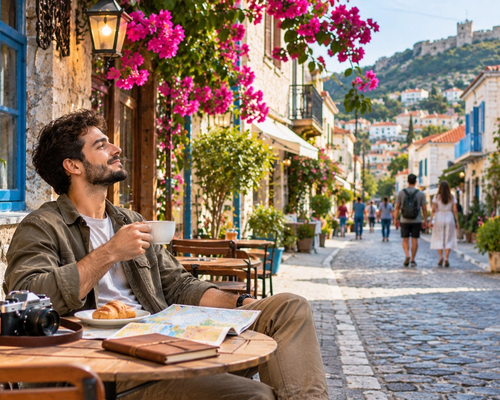
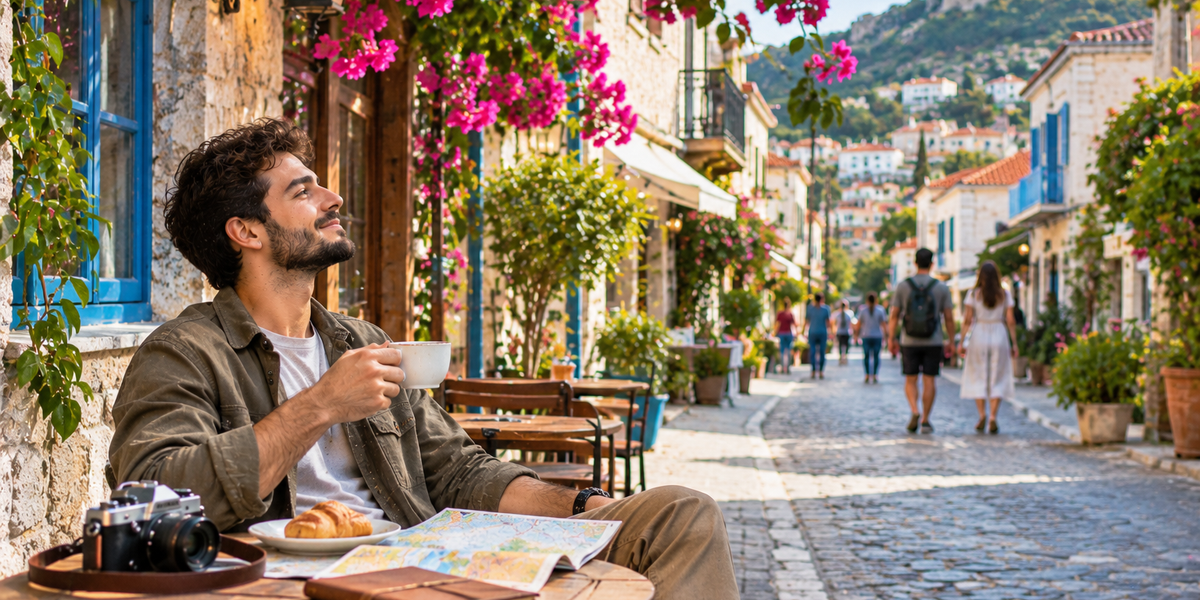
The first morning, you wander around looking for coffee. The second morning, you return to the place you liked. By the fourth morning, someone behind the counter recognizes you.
Suddenly, you have a café.
You find the supermarket. You learn which street takes you back without opening a map. You know where the good bakery is. You recognize the dog that sleeps outside the shop downstairs.
These things are insignificant compared with the landmarks we travel thousands of kilometers to see. Yet they are often what creates attachment.
Home, after all, is largely made of repetition.
People Can Change Your Relationship With a Place
Sometimes we fall in love with destinations because of the people we encounter there.
It might be a restaurant owner who remembers your order, someone who helps when you are lost, a family who invites you somewhere, or a stranger who spends twenty minutes explaining which bus you need despite neither of you speaking the other’s language particularly well.
Travel makes us unusually dependent on small acts of kindness. At home, we know how everything works. Abroad, even simple things can require help.
When that help arrives generously, the memory becomes attached to the place itself.
Years later, you may barely remember the museum you visited that afternoon. You remember the woman who walked three blocks with you because pointing at the map was not enough.
Some Places Let You Become a Different Version of Yourself
One of the strangest things about travel is that leaving home can sometimes make you feel more like yourself.
At home, identity comes with history. People know who you are. Your routines are established. Your responsibilities are waiting. There are versions of you that exist in other people’s expectations.
In a new place, much of that temporarily disappears.
Nobody knows what you normally do on Saturday morning. Nobody knows whether you are usually adventurous, shy, organized, spontaneous, fashionable, serious, or terrible at directions.
You get to find out what you do when nobody is expecting anything particular from you.
Sometimes we think we miss a destination when what we actually miss is the version of ourselves who existed there.
Beauty Helps, but Beauty Isn’t Enough
Beautiful places are easy to admire. They are not always easy to love.
You can stand somewhere extraordinary, recognize that it is one of the most impressive things you have ever seen, and still feel no particular desire to stay.
Meanwhile, another place may be imperfect. The buildings are a little worn. Traffic is irritating. The weather changes every twenty minutes. There is nothing there that would necessarily make a list of the world’s greatest destinations.
And yet you keep thinking about it.
Love for a place often depends on something less obvious than beauty. It is atmosphere, scale, sound, pace, people, food, weather, memory, and the way all of those things interact with who you happen to be.
A postcard can show you whether somewhere is beautiful. It cannot tell you whether you will belong there.
Sometimes the Timing Is What Makes the Place
We do not arrive anywhere as neutral observers.
We bring our lives with us.
A destination you visit at nineteen may feel completely different at thirty-five. A city experienced during heartbreak becomes different from the same city visited while falling in love. Traveling somewhere with your parents creates a different memory from returning years later with your own children.
Sometimes a place becomes important because you encountered it during a particular chapter of your life.
Perhaps you were finally independent. Perhaps you had just left something behind. Perhaps you were beginning again. Perhaps nothing dramatic happened at all—you were simply happy there.
The destination becomes attached to that version of your life, and years later, returning can feel almost like meeting your younger self.
Language Can Make Somewhere Feel Closer
There is a particular intimacy in understanding the conversations happening around you.
Hearing a familiar language thousands of kilometers from home can instantly collapse the distance between places. But even unfamiliar languages can create attachment. After several days, certain sounds become recognizable. You learn how people greet each other, order coffee, say thank you, call their children, or complain when the bus is late.
You begin collecting small pieces of the place.
Learning even a few words can change how you experience it because you are no longer only observing. You are participating, however imperfectly.
And sometimes there is a language you simply enjoy hearing long before you understand it.
Food Creates Belonging Faster Than Almost Anything
There is a moment on many trips when you stop asking, “What should we try?” and start saying, “Let’s go back to that place.”
That shift matters.
Food is one of the quickest ways a destination becomes personal. The first meal is discovery. The second is preference. The third is already becoming tradition.
You begin craving something you did not know existed two weeks earlier. You learn how the local coffee works. You develop opinions about which bakery is better. You start ordering without looking at the menu.
Years later, one taste can bring the entire place back.
The Places We Love Aren’t Always the Ones We Expected
Travel wish lists are built before we arrive. Attachment happens afterward.
Sometimes the city you dreamed about for years leaves you strangely cold. You appreciate it, photograph it, and move on.
Then somewhere you added to the itinerary almost accidentally becomes the place you cannot stop talking about.
That unpredictability is part of what makes travel worthwhile.
If we already knew which destinations would matter most to us, traveling would simply be confirmation. Instead, the world occasionally surprises us with places we did not know we were looking for.
Feeling at Home Somewhere Doesn’t Mean You Need to Move There
Travel has a way of producing dramatic thoughts.
By day four, you are checking apartment prices. By day six, you have mentally opened a small bookstore near the sea despite having no experience running a bookstore and only speaking fourteen words of the local language.
Then you go home.
And that is fine.
A place does not have to become your permanent address to become part of your life. Some places are wonderful precisely because you visit them. They exist outside your routines and responsibilities. Returning feels special because leaving is part of the relationship.
You can belong somewhere temporarily.
Maybe Home Is Bigger Than One Place
We tend to speak about home as though everyone gets one.
One hometown. One house. One country. One place where you belong.
But travel complicates that idea.
You can feel at home in the city where you grew up and somewhere you discovered twenty years later. You can miss two countries simultaneously. You can feel attached to a mountain you visit once a year, a neighborhood where you lived for six months, or an island where you spent only one extraordinary week.
Perhaps home is not always the place where your belongings are.
Sometimes it is the place where your shoulders drop without you noticing. Where you stop checking the map. Where the pace feels right. Where ordering breakfast becomes familiar surprisingly quickly.
And sometimes you arrive somewhere for the first time, walk out of the station or airport, look around at a place that has absolutely no reason to know you yet, and experience the strangest feeling.
Not I’ve been here before.
Something closer to I could belong here.
Maybe that is why certain places stay with us long after the photographs have disappeared into our camera rolls.
We were visitors.
But for a little while, somehow, we were also home.