The Historic Cities Where You Can Actually Feel the Past
Some historic cities preserve their past beautifully. Others make you feel as though you have accidentally walked straight into it. The difference is difficult to define, but you know it when you experience it. History is no longer contained inside museums or explained on plaques. It is beneath your feet in worn stone streets, built into city walls, hidden under newer buildings, and visible in neighborhoods where people still live their ordinary lives among structures that have survived for centuries.
The most memorable historic cities are rarely frozen in time. They are layered. Roman foundations sit beneath medieval churches. Ottoman houses stand beside modern cafés. Ancient temples overlook traffic. Markets continue in places where people have traded for generations. These cities remind you that history was never a separate world inhabited by people in costumes. It happened exactly where everyday life is still happening now.
Rome, Italy
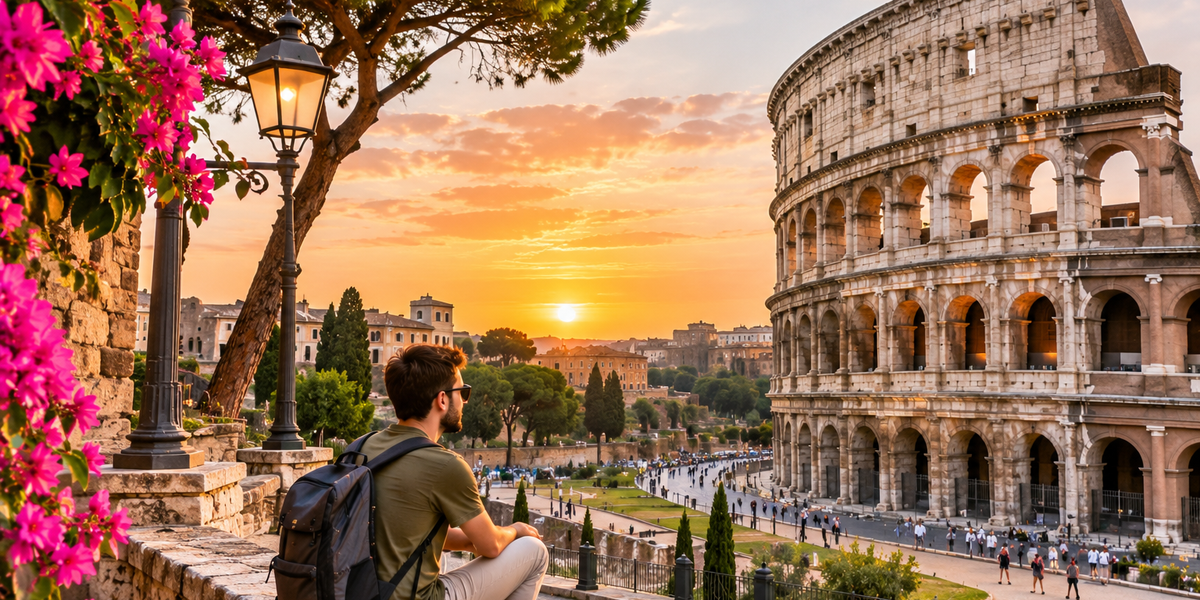
Few cities make the physical presence of history as unavoidable as Rome. You can turn an ordinary corner and find yourself facing a two-thousand-year-old monument, walk beside pieces of ancient walls on the way to dinner, or look down through glass floors into archaeological remains beneath modern buildings. The Colosseum and Roman Forum provide the obvious introduction, but Rome becomes more interesting when you notice how casually antiquity is woven into everything around it. Ancient columns have been incorporated into later buildings, churches occupy earlier sacred sites, and entire periods of history appear to have been stacked on top of one another. Rome does not feel like a carefully preserved historical exhibit because it never stopped being a functioning city. That continuity is exactly what makes its past feel so present.
Istanbul, Türkiye
Istanbul has been the capital of empires, a meeting point between continents, and one of the world’s great trading cities. Its history is visible not as a single era but as overlapping civilizations. Hagia Sophia alone reflects enormous political and religious transformations, while the Blue Mosque, Topkapı Palace, Basilica Cistern, city walls, bazaars, and countless smaller buildings reveal different chapters of the city’s story. Yet some of Istanbul’s strongest sense of history comes simply from moving through it. Ferries cross the Bosphorus as they have in different forms for generations, merchants work inside historic markets, calls to prayer move across rooftops, and streets climb between wooden houses, mosques, cafés, and shops. Istanbul feels historical because the past has never been neatly separated from the present.
Jerusalem
Few cities carry history as intensely as Jerusalem. Within a relatively compact area, streets and sacred places hold profound significance for Judaism, Christianity, and Islam, while layers of conquest, destruction, rebuilding, pilgrimage, and political conflict stretch back thousands of years. Walking through the Old City means moving between quarters, religious traditions, archaeological sites, markets, and places that millions of people around the world know through scripture and history long before they ever see them in person. Jerusalem can be emotionally and politically complex, and understanding it requires more than treating it as a collection of ancient monuments. But that complexity is part of why the past feels unusually close here. History is not simply something Jerusalem remembers; it continues to shape how the city is understood and experienced today.
Athens, Greece
Athens creates one of travel’s great historical contrasts. Modern traffic, apartment buildings, restaurants, street art, and busy neighborhoods spread beneath the Acropolis, where the Parthenon has overlooked the city for nearly 2,500 years. Standing there makes the distance between ancient history and modern life suddenly feel surprisingly small. The Acropolis is only the beginning. The Ancient Agora, Roman Agora, Temple of Olympian Zeus, archaeological museums, and remains scattered throughout central Athens reveal how many different periods have occupied the same landscape. What makes Athens compelling is not that everything looks ancient—it absolutely does not—but that antiquity keeps interrupting the modern city.
Kyoto, Japan
Kyoto offers a different relationship with the past. Rather than overwhelming visitors with enormous ruins, much of its history survives through temples, shrines, gardens, traditional wooden buildings, crafts, ceremonies, and cultural practices that remain part of contemporary life. Walk early through areas such as Gion or Higashiyama and certain streets can momentarily feel remarkably removed from modern Japan. Elsewhere, centuries-old temples sit beside ordinary neighborhoods and convenience stores. Kyoto demonstrates that experiencing history is not always about seeing something ruined. Sometimes the strongest connection comes from traditions that have continued, adapted, and remained meaningful across generations.
Dubrovnik, Croatia
Approaching Dubrovnik’s old city walls makes it immediately obvious why the city has captured so much imagination. Massive fortifications surround pale stone streets and terracotta roofs beside the Adriatic, creating an old center with a remarkably coherent appearance. Walking the walls provides the famous view, but the city’s history becomes more tangible when you descend into its narrow streets, staircases, churches, courtyards, and residential lanes. Dubrovnik was once the center of the maritime Republic of Ragusa, and its prosperity and strategic importance shaped much of what survives today. The city also carries much more recent history, including damage suffered during the 1990s conflict. Its beauty is therefore not simply a preserved medieval scene but part of a longer story of destruction, survival, and restoration.
Edinburgh, Scotland
Edinburgh seems almost designed to tell stories. The medieval Old Town rises dramatically toward Edinburgh Castle, while narrow closes disappear between tall stone buildings and streets follow a layout shaped centuries ago. Weather helps. Mist, rain, dark stone, and early winter evenings can make the city’s past feel particularly close. The Royal Mile contains many of the major historic sites, but Edinburgh’s atmosphere comes from the spaces between them: old cemeteries, hidden courtyards, steep stairways, taverns, underground spaces, and buildings that have accumulated generations of stories. Unlike cities where history appears primarily as ruins, Edinburgh’s historic architecture still defines the experience of moving through the city.
Fez, Morocco
Entering the medina of Fez can feel like entering a city operating according to a completely different logic. Streets narrow until vehicles become impossible, alleys branch unexpectedly, workshops open directly onto passageways, and goods are transported through routes established long before modern urban planning existed. The old medina contains mosques, madrasas, fountains, markets, traditional houses, bakeries, workshops, and the famous tanneries. What makes Fez particularly powerful is that its historic center is not simply maintained for visitors. People work, shop, worship, study, cook, repair things, and live inside it. The result can be chaotic and overwhelming, but it also makes the past feel less like something being reenacted and more like something that evolved without completely disappearing.
Prague, Czech Republic
Prague’s historic center survived with an extraordinary concentration of Gothic, Baroque, Renaissance, and Romanesque architecture, giving entire sections of the city a visual continuity that many European capitals lost. Prague Castle rises above the Vltava, Charles Bridge connects the old districts, and the Old Town contains streets where centuries of architecture sit within a short walk. The busiest landmarks can become extremely crowded, but Prague changes character early in the morning and late at night. Walking across Charles Bridge before the city fully wakes or exploring quieter streets away from Old Town Square makes it easier to notice the details that disappear in the daytime crowds. Prague is one of those places where simply walking is often the most effective history lesson.
Sarajevo, Bosnia and Herzegovina
Sarajevo’s history feels unusually close because so many major historical forces have passed through the city within a relatively small area. Ottoman architecture and bazaars sit near Austro-Hungarian buildings, while places associated with the assassination of Archduke Franz Ferdinand connect the city directly to the events that triggered World War I. More recent scars from the siege of Sarajevo during the 1990s remain visible as well. Walking through the city can therefore take you across centuries within a matter of minutes. Sarajevo’s past is not always comfortable, but that is precisely why visiting can be so powerful. It demonstrates how history is experienced by ordinary people rather than merely recorded through dates, treaties, and political leaders.
Cairo, Egypt
Cairo’s relationship with history operates on a scale that can be difficult to comprehend. Nearby Giza contains monuments built more than four thousand years ago, yet ancient Egypt represents only one chapter of the region’s story. Islamic Cairo contains historic mosques, madrasas, gates, markets, and streets shaped by later dynasties, while Coptic Cairo preserves another important layer of the city’s religious history. Modern Cairo surrounds all of this with traffic, towers, apartment blocks, cafés, shops, and millions of people. The contrast can initially feel chaotic, but it is also what makes the city extraordinary. History here is not isolated in a quiet archaeological landscape. It exists beside one of the world’s busiest modern cities.
Gjirokastër, Albania
Gjirokastër offers history on a more intimate scale. Built along a steep hillside in southern Albania, the city is known for its stone-roofed Ottoman-era houses, cobbled streets, old bazaar, and enormous fortress overlooking the valley. Walking through the historic center reveals how architecture responded to both the landscape and the social structures of earlier periods. Traditional houses provide glimpses into domestic life rather than only political or military history, making the past feel personal. Albania’s complicated twentieth-century history adds another layer, meaning Gjirokastër is not simply an Ottoman town preserved in stone but a place that has continued changing through radically different political eras.
Pompeii, Italy
Pompeii is not a living city in the same way as the others, but few places make ancient life feel so immediate. The eruption of Mount Vesuvius in AD 79 buried the Roman city, preserving streets, houses, shops, public buildings, mosaics, graffiti, and countless traces of ordinary existence. Walking through Pompeii is powerful because the details are so recognizable. People advertised businesses, decorated their homes, complained, ate, worked, voted, entertained guests, and wrote on walls. Ancient Romans stop feeling like abstract historical figures and begin to look like people whose daily routines happened to take place two thousand years before ours. That familiarity is what makes the site so haunting.
History Feels Different When You Walk Through It
Reading about the past gives you facts. Visiting the places where it happened gives those facts scale. A city wall becomes more meaningful when you realize how enormous it is to walk around. A medieval street feels different when you notice how narrow it becomes after dark. An ancient temple changes when you see where it stands in relation to the mountains, sea, or city surrounding it.
The most powerful historic cities also complicate the neat timelines we learn in books. Civilizations overlap. Buildings change purpose. Empires disappear while markets survive. Places are destroyed and rebuilt. People inherit streets designed by societies that existed hundreds or thousands of years before them and continue using them for completely ordinary things.
That may be the real reason certain cities make the past feel so close. They remind you that history did not happen in another world. It happened in kitchens, streets, shops, homes, religious buildings, government offices, and public squares. People woke up, went to work, argued, fell in love, worried about money, raised children, made plans, and assumed tomorrow would arrive much as today had.
Then centuries passed.
And somehow, the street is still there.