The Islands Worth the Long Flight
There is a particular moment during a long flight when every island holiday begins to feel like a questionable decision. You have watched two films, eaten something mysterious from a plastic tray, slept for what felt like three hours but was actually twenty minutes, and started wondering whether any beach could possibly justify this much effort. Then you arrive. The airport doors open to warm air, the first glimpse of impossible blue water appears between buildings, and suddenly the journey starts making sense.
The best faraway islands offer more than beautiful beaches. If you are going to cross oceans to reach somewhere, it should feel genuinely different from home. It should give you landscapes, food, wildlife, culture, or experiences that could not simply be recreated with a shorter flight. These are the islands that make the jet lag, connections, and hours spent staring at the seat in front of you feel like a reasonable price to pay.
Bora Bora, French Polynesia
Bora Bora is one of those rare destinations that looks almost exactly like the fantasy version of itself. A turquoise lagoon surrounds a mountainous volcanic interior, coral reefs sit beneath remarkably clear water, and overwater bungalows stretch from tiny islands into the sea. It is expensive, remote, and undeniably associated with honeymoons, but the landscape is extraordinary enough to survive all the marketing around it. The best days here are surprisingly simple: swimming directly from your accommodation, snorkeling through warm water, taking a boat across the lagoon, and watching Mount Otemanu change color as the light shifts. You travel a very long way to reach Bora Bora, but once there, you understand why people choose it for trips they intend to remember for the rest of their lives.
Palawan, Philippines
Palawan offers the kind of tropical scenery that seems designed to make every other beach look slightly disappointing afterward. Around El Nido and Coron, enormous limestone cliffs rise directly from turquoise water, hiding lagoons, beaches, reefs, and small islands that are often reached only by boat. The journey can involve several stages depending on where you are coming from, but that sense of remoteness is part of what makes the region memorable. Days revolve around island-hopping, snorkeling, diving, swimming, and eating simple meals beside the water. Palawan can be busy in its most famous areas, but there is enough coastline and enough islands to find quieter places if you are willing to travel slightly farther.
Kauai, Hawaii
Kauai is the Hawaiian island for people who want the landscape to dominate the trip. Much of the island feels intensely green, with waterfalls dropping through valleys, tropical vegetation covering mountains, and the dramatic cliffs of the Nā Pali Coast meeting the Pacific. Beaches are part of the experience, but Kauai is equally about hiking, scenic drives, boat trips, and stopping repeatedly because the view has changed again. Waimea Canyon offers an entirely different landscape from the lush northern side of the island, while the coastline contains stretches that feel remarkably wild. Kauai rewards travelers who do not need constant nightlife or resort entertainment and are perfectly happy spending most of the day outside.
Mauritius
Mauritius is sometimes reduced to luxury resorts and honeymoon photographs, but the island has far more personality than that description suggests. Located in the Indian Ocean east of Madagascar, it combines beaches and coral lagoons with mountains, waterfalls, sugarcane fields, small towns, markets, and a remarkably diverse food culture influenced by African, Indian, Chinese, and European traditions. You can spend one day doing absolutely nothing beside the sea and the next hiking, exploring villages, visiting markets, or driving through the mountainous interior. That variety is what makes Mauritius particularly worth the distance. You do not have to choose between a relaxing beach holiday and a trip where you actually explore somewhere—you can have both.
Zanzibar, Tanzania
Zanzibar offers something many tropical destinations cannot: a beach holiday with a deep sense of history and place. White-sand beaches and warm Indian Ocean water surround the island, but Stone Town gives the trip an entirely different dimension. Its narrow streets, carved wooden doors, markets, mosques, old buildings, and layered Swahili, Arab, Indian, African, and European influences tell a much more complicated story than the resort coastline suggests. Outside the city, spice farms, fishing villages, and smaller communities offer reasons to explore beyond the beach. Zanzibar is especially rewarding when combined with mainland Tanzania, allowing travelers to pair a safari with several slower days beside the ocean.
The Maldives
The Maldives may be one of the world’s most obvious island destinations, but sometimes a place becomes famous because it really is exceptional. Tiny islands sit inside brilliant turquoise lagoons, coral reefs begin just offshore, and the geography creates a feeling of separation from ordinary life that few destinations can match. The classic resort experience is designed around doing very little extremely well: swimming, snorkeling, diving, eating, reading, sleeping, and watching the ocean. But travelers can also stay on inhabited local islands, where the experience is different and often considerably more affordable. The Maldives is not necessarily the destination for someone who needs museums, shopping, and constant activities. It is for the person who wants the world to become very small for a few days—in the best possible way.
Seychelles
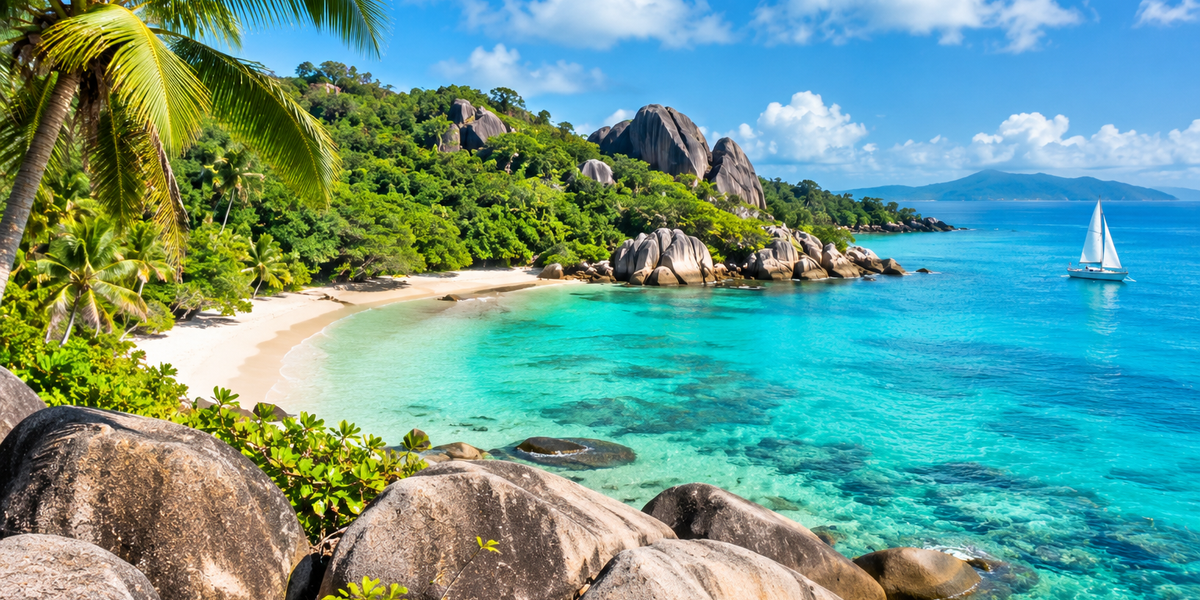
The Seychelles look different from almost every other tropical island destination because of the enormous granite boulders scattered along many of their beaches. On islands such as Mahé, Praslin, and La Digue, pale sand, turquoise water, lush vegetation, and sculpted rocks combine into landscapes that almost seem deliberately arranged. Traveling between islands adds variety to the trip, while hiking trails and nature reserves provide alternatives to spending every day on the beach. La Digue in particular rewards a slower pace, with bicycles often replacing cars for getting around. The Seychelles are remote and can be expensive, but they deliver the feeling many travelers are chasing when they decide to fly halfway around the world for an island.
Fiji
Fiji is not a single island experience but an archipelago containing hundreds of islands, which means the trip can look very different depending on where you go. Some travelers stay in polished resorts, while others take boats to smaller islands where beaches, reefs, villages, and simple accommodations create a much more relaxed experience. Fiji is famous for diving and snorkeling, but the warmth of local hospitality is often what visitors remember most strongly. The distance means it makes sense to stay longer rather than trying to squeeze the trip into a few days. Once you have traveled that far, slowing down is not just preferable; it feels like the entire point.
Bali, Indonesia
Bali has become so famous that calling it an escape can sound almost ridiculous. Certain parts of the island struggle with traffic, development, and overtourism, and anyone expecting an untouched tropical paradise may be surprised. Yet Bali remains worth traveling for when you explore beyond the most crowded areas. Rice terraces, temples, volcanic landscapes, beaches, traditional villages, ceremonies, and an extraordinary food scene give the island a depth that explains its enduring appeal. The key is not trying to recreate someone else’s Bali itinerary. Spend time in quieter areas, wake early, travel slowly, and consider combining Bali with nearby islands. Beneath the tourism industry is a place with a strong culture and landscape that still feels distinctly its own.
Sri Lanka
Sri Lanka is much larger and more varied than the typical island getaway, which is precisely why it justifies the journey. Beaches circle much of the country, but the interior contains tea plantations, mountains, ancient cities, national parks, temples, and some of the world’s most beautiful train journeys. You can surf in the morning, travel through green hill country a few days later, see elephants in a national park, and finish the trip on another stretch of coastline entirely. Sri Lankan food alone gives travelers a reason to keep exploring, with curries, hoppers, sambols, seafood, and regional dishes turning almost every meal into part of the trip. This is the island for someone who wants a beach holiday but knows they will become restless after three consecutive days on a sunbed.
Réunion
Réunion is a French island in the Indian Ocean that feels more like a mountain adventure surrounded by beaches than a conventional tropical resort destination. Volcanic peaks dominate the interior, hiking routes cross dramatic valleys and cirques, waterfalls disappear into dense vegetation, and Piton de la Fournaise remains one of the world’s most active volcanoes. The coastline adds beaches and lagoons to the mix, but the island’s rugged interior is what makes it unusual. Réunion is particularly appealing to travelers who would rather spend the morning climbing something and the afternoon swimming than spend an entire week horizontal beside the sea.
New Zealand’s South Island
Calling New Zealand’s South Island a tropical escape would be deeply misleading, but few islands justify a long flight more convincingly. Snow-covered mountains, fjords, glaciers, lakes, forests, beaches, vineyards, and enormous stretches of open landscape make it feel like several countries compressed into one. The best way to experience it is usually by road, allowing enough time for plans to change whenever another lake, mountain pass, or walking trail appears. Queenstown, Milford Sound, Aoraki/Mount Cook, the West Coast, and countless smaller stops could easily fill several weeks. This is not the island you cross the world to reach for relaxation. You go because the journey itself becomes the holiday.
Go Far Enough to Feel Somewhere Else
Long-distance travel is demanding. It costs more, takes more planning, and uses precious vacation days simply getting from one side of the world to another. That is why the destination should offer something more meaningful than a beautiful hotel beside a beach. If you are going to travel that far, go somewhere that makes you curious enough to leave the resort, even when the resort is very comfortable.
The islands worth the long flight are the ones that create a sense of distance in more than kilometers. The landscape changes. The food changes. The rhythm of the day changes. You start waking with the sun, swimming before breakfast, forgetting what day it is, and measuring time by ferries, tides, hikes, and sunsets rather than meetings and notifications.
Eventually, of course, you have to make the long journey home. You board another plane, find your seat, and begin the slow process of crossing the world in reverse. But this time, somewhere between the second meal and the third movie, you already know the flight was worth it.