The Small Towns Worth the Detour
Some of the best places you visit are the ones that were never supposed to be the main destination. They are the towns you notice on a road sign, the villages someone recommends over breakfast, or the places that require changing trains twice when there is a much easier route available. Big cities usually come with a checklist of things you are expected to see, but small towns offer something different: the pleasure of having nowhere particularly important to be. You walk because the streets look interesting, stop because a café looks inviting, and discover places without already knowing what they are supposed to look like. In a world of tightly planned itineraries, sometimes the detour becomes the part of the trip you remember most.
Colmar, France
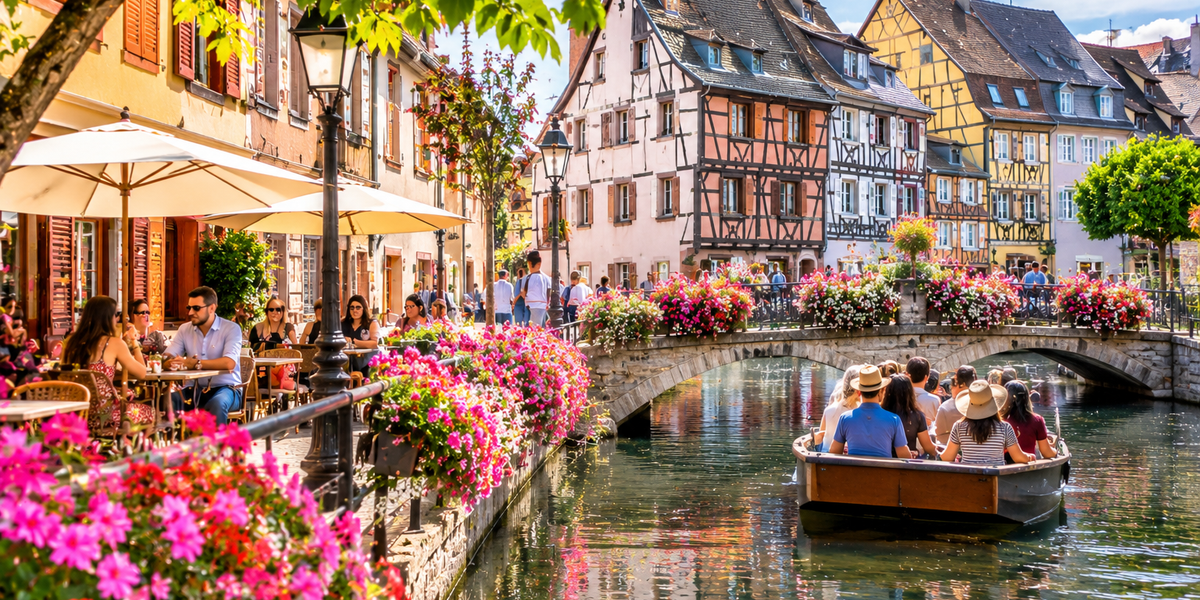
Colmar in northeastern France looks almost unreal at first, with colorful half-timbered houses, narrow canals, cobbled streets, flower-covered windows, and small bridges crossing the water. Its location in Alsace, close to the German border, has given the town a distinctive combination of French and German influences that can be seen in everything from its architecture to its food. The most photographed area, often called Little Venice, is beautiful, but Colmar is best enjoyed by wandering beyond the obvious streets and letting yourself get slightly lost. The surrounding Alsace wine region also makes it an excellent base for exploring nearby villages, vineyards, and countryside. It is the kind of place where arriving for a few hours can easily turn into wishing you had booked two nights.
Hallstatt, Austria
Hallstatt has become one of Europe’s most photographed villages, but there is still something extraordinary about seeing it in person. The village occupies a remarkably narrow strip of land between the mountains and Hallstätter See, with traditional houses climbing the hillside above the lake. Its popularity means that the middle of the day can feel crowded, particularly during peak travel periods, which is why staying overnight or arriving early can completely change the experience. Once things become quieter, Hallstatt feels less like a famous attraction and more like the tiny alpine settlement it actually is. Walking beside the lake in the morning, watching mist settle over the mountains, or simply sitting somewhere with the water in front of you is more memorable than rushing between viewpoints trying to reproduce the photograph everyone else already has.
Alberobello, Italy
There are plenty of beautiful towns in Italy, but Alberobello looks unlike almost anywhere else in the country. Located in Puglia, it is famous for its trulli, small whitewashed stone buildings topped with distinctive conical roofs. Walking through neighborhoods filled with them feels almost like entering an illustrated storybook. The central streets attract plenty of visitors and souvenir shops, but quieter residential areas reveal a more interesting side of the town. Alberobello also makes sense as part of a larger journey through Puglia, where you can combine it with olive groves, coastal towns, traditional masserie, and long meals that make you reconsider why you were ever trying to travel quickly in the first place.
Český Krumlov, Czech Republic
Český Krumlov is one of those places that makes much more sense when viewed from above. The Vltava River curves dramatically around its historic center, surrounding tightly packed streets and terracotta rooftops beneath an enormous castle complex. Many travelers visit as a day trip from Prague, but staying overnight reveals a different version of the town. Once many of the daytime visitors leave, the narrow streets become quieter and the atmosphere changes completely. You can walk beside the river, find a small restaurant for dinner, wander through the old center after dark, and experience the town without feeling that you are moving through a sightseeing schedule. It is a reminder that sometimes the best way to enjoy a popular destination is simply to stay longer than everyone else.
Sintra, Portugal
Less than an hour from Lisbon, Sintra feels dramatically removed from the capital. Forested hills surround a town filled with palaces, historic estates, gardens, villas, and winding roads that disappear into dense greenery. Pena Palace attracts much of the attention, but reducing Sintra to a single palace misses what makes the area so compelling. There are gardens to wander through, old estates hidden behind walls, viewpoints across the hills, and walking routes that make the entire landscape feel slightly mysterious. Because it is such an easy day trip from Lisbon, many visitors try to fit everything into a few frantic hours. Staying longer allows you to experience quieter mornings and evenings when the town feels less like an attraction and more like the strange, romantic mountain retreat that made it famous.
Reine, Norway
Reine, in Norway’s Lofoten Islands, is the kind of place that makes you stop talking when you first see it. Traditional red fishermen’s cabins sit beside cold blue water while enormous mountains rise almost vertically behind them. The village itself is tiny, but that is almost irrelevant because the landscape is the real reason to come. This is a destination for hiking, driving, kayaking, photography, and simply watching the weather move across the mountains. During summer, the midnight sun stretches the days almost endlessly, while the darker seasons bring an entirely different atmosphere and the possibility of seeing the northern lights. Reine is not somewhere you visit because you need dozens of attractions to fill your schedule. You visit because occasionally the surroundings themselves are enough.
Rothenburg ob der Tauber, Germany
Rothenburg ob der Tauber looks almost exactly like the imaginary medieval German town people picture before visiting Germany. Fortified walls surround a historic center filled with towers, timber-framed buildings, cobbled lanes, colorful facades, and steep rooftops. It is undeniably touristy, but popularity does not automatically make somewhere less beautiful. Walking along the old town walls gives you a different perspective, while exploring early in the morning or later in the evening reveals much quieter streets. Staying overnight is particularly worthwhile because many day visitors disappear by late afternoon. Once they do, the town feels less like a stop on a sightseeing route and more like somewhere that has temporarily slipped out of another century.
Gjirokastër, Albania
Gjirokastër rises across a steep hillside in southern Albania, its stone houses and slate-colored roofs creating one of the most distinctive old towns in the Balkans. Above everything sits the fortress, overlooking the valley and surrounding mountains. The historic center reflects centuries of Ottoman influence, with traditional houses, narrow streets, old bazaars, and architecture that rewards slow exploration. The steep cobbled lanes make rushing almost impossible anyway, which is part of the charm. Gjirokastër is particularly memorable when combined with a wider trip through southern Albania, where archaeological sites, mountain landscapes, villages, and the Ionian coast are all within reach. It is a place that encourages you to stop thinking about how many attractions you have completed and simply pay attention to where you are.
Kotor, Montenegro
Kotor occupies one of the most dramatic settings on the Adriatic, squeezed between steep mountains and the waters of the Bay of Kotor. Inside its fortified old town, narrow stone streets lead unexpectedly into small squares, churches, cafés, and hidden courtyards. The climb into the mountains above town is demanding, but the view back across the bay explains immediately why Kotor is worth the journey. Cruise ships can bring significant crowds during the day, so staying overnight or exploring early can make a major difference. Once the busiest hours pass, the old town becomes quieter and you can wander without much purpose, which is often when Kotor feels most memorable.
Mostar, Bosnia and Herzegovina
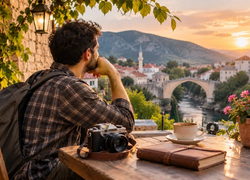
Mostar is larger than the typical small-town detour, but it deserves a place on any slower journey through the Balkans. The city’s defining image is Stari Most, the reconstructed Ottoman-era bridge arching high above the Neretva River, but the experience of Mostar extends far beyond that single landmark. Stone streets wind through the old town, restaurants serve traditional Bosnian food, and the surrounding landscape becomes increasingly dramatic as you move beyond the city. Mostar also carries a complicated recent history that is still visible alongside its restored historic center. Spending more than a few hours here allows you to move beyond the famous bridge and understand a little more of the place itself.
The Places Between the Destinations
There is a temptation when traveling to optimize everything. We want the fastest train, the shortest route, the most efficient itinerary, and the maximum number of places squeezed into the available days. But efficiency is not necessarily what makes travel memorable. Sometimes the road that takes an extra hour gives you the view you talk about for years. Sometimes the town where “there isn’t much to do” is exactly where you finally slow down enough to enjoy being away.
The next time you plan a trip, leave a little room for somewhere that does not need to justify an entire vacation. Take the exit toward the old town. Stay overnight instead of driving straight through. Stop for lunch somewhere you cannot pronounce. Walk without searching for the next attraction on your phone. The famous destinations will still be there, but the places between them often contain the moments that make the journey feel like yours.