Why the Slow Things Are Quietly Winning
For years, faster seemed automatically better. Faster delivery, faster internet, faster careers, faster growth, faster results. We learned to watch films at increased speed, answer messages while doing something else, order dinner without speaking to anyone, and expect almost anything we wanted to arrive tomorrow. Waiting became a problem technology was supposed to solve.
And yet, something interesting is happening alongside all that acceleration. People are baking bread that takes two days. They are buying records, shooting film, growing vegetables, knitting sweaters, keeping paper journals, taking long walks, reading physical books, and traveling by train when flying would be quicker. Restaurants advertise slow cooking. Travelers search for quiet villages. Even luxury increasingly looks less like having more things and more like having enough time to enjoy them.
The slow things never disappeared. We may simply be remembering why they mattered.
Speed Solved Problems, but It Created New Ones
There is plenty to love about convenience. Nobody needs to romanticize waiting three weeks for a letter or spending an entire afternoon completing a task that now takes five minutes. Technology has removed enormous amounts of unnecessary friction from everyday life.
The problem begins when efficiency stops being a tool and becomes the goal of everything.
Once something can be done faster, the saved time rarely remains empty. We fill it with another task. Faster email did not give us less correspondence; it gave us more. Faster transportation did not necessarily make us travel less; it allowed us to schedule more tightly. Smartphones removed dozens of small inconveniences while simultaneously making us reachable almost everywhere.
We became more efficient without necessarily becoming less busy.
Slow Things Demand Our Attention
You cannot rush certain experiences without changing what they are.
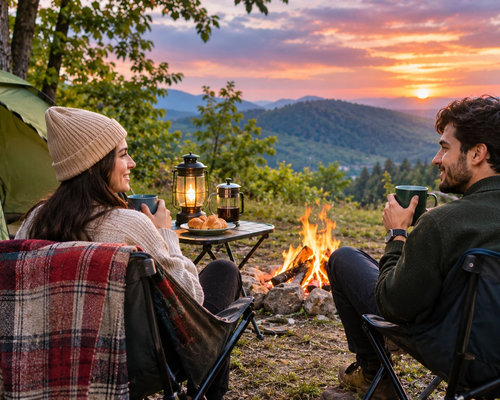
You can technically listen to an audiobook at double speed, but that is different from sitting with a novel for an afternoon. You can photograph a landscape in two seconds, but that is different from walking through it for two hours. You can order dinner instantly, but cooking something slowly with another person creates an entirely different experience.
Slow activities force us to participate.
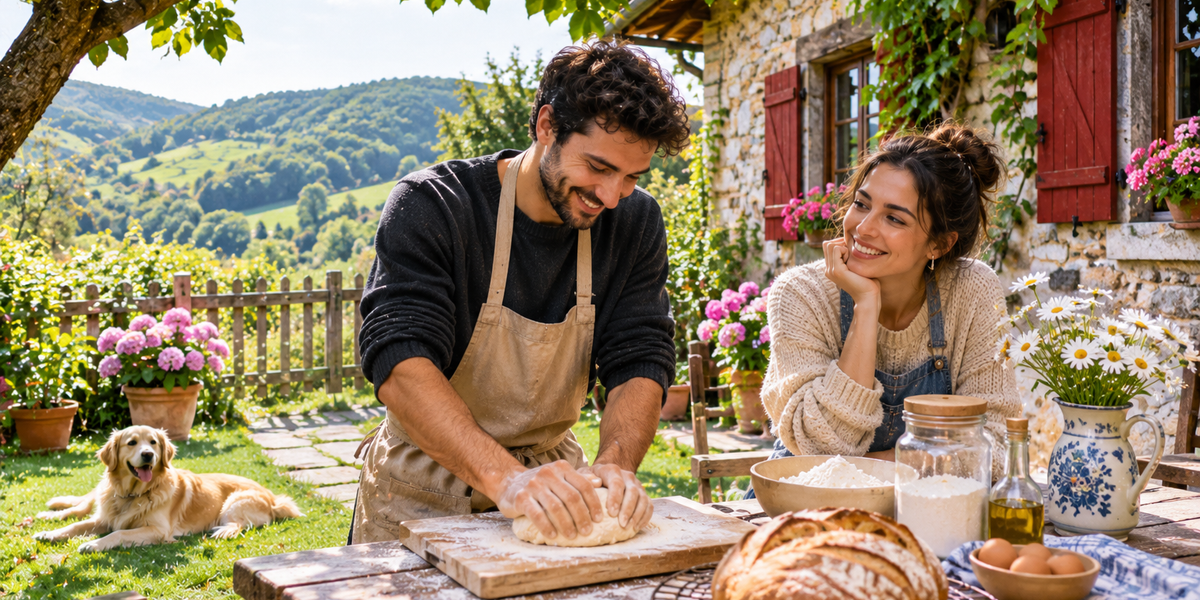
They occupy enough of our attention that multitasking becomes difficult. Your hands are covered in flour. You are halfway up a mountain. You are holding a paintbrush. You are talking to someone across a table.
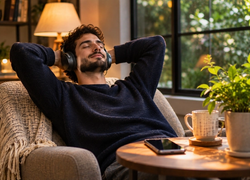
For a while, there is nowhere else you are supposed to be.
We Are Rediscovering the Pleasure of Making Things
Modern life makes it possible to buy almost anything finished. That convenience is extraordinary, but it also removes the satisfaction of watching something gradually become real.
Making things restores that process.
This helps explain the appeal of hobbies that seem objectively inefficient. Knitting a sweater can take weeks when you could buy one in ten minutes. Growing tomatoes requires months of attention when supermarkets sell them year-round. Developing film is slower and less predictable than taking a digital photograph.
The inefficiency is partly the point.
When effort is visible in the finished object, it carries a different kind of value. You do not simply have bread. You made bread. You do not simply have a photograph. You waited for it.
Anticipation Is Part of Enjoyment
Instant access has quietly removed anticipation from many experiences.
A television series once unfolded over months. Photographs came back from development days later. A letter required waiting for a reply. A new album meant going somewhere to buy it. Even travel involved longer periods of not knowing exactly what a destination would look like.
Waiting could certainly be frustrating, but anticipation also extended pleasure.
When everything becomes available immediately, desire and fulfillment move almost on top of each other. You want something, click something, and receive it. There is barely enough time to imagine having it.
Slow experiences restore the space between wanting and receiving, and sometimes that space makes the eventual experience richer.
Physical Things Feel Different in a Digital World
There is a reason physical books, vinyl records, notebooks, printed photographs, and handwritten cards continue to survive despite more efficient digital alternatives.
They occupy space.
A physical book remembers where you stopped. A notebook collects crossed-out thoughts and terrible handwriting. A photograph can live on a refrigerator for fifteen years. A record asks you to choose an album rather than letting an algorithm continuously supply background music.
None of these things is objectively more practical.
That may be precisely why they feel meaningful.
In a world where so much of our lives exists behind identical glass screens, objects with texture, weight, imperfections, and evidence of use can feel strangely reassuring.
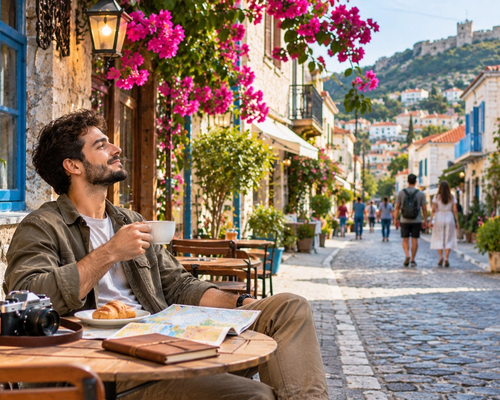
Slow Travel Is Changing What a Holiday Means
For a long time, successful travel was often measured by quantity. How many cities did you see? How many countries? How many landmarks? How much could you fit into ten days?
Increasingly, travelers are discovering the pleasure of doing less.
Staying in one neighborhood long enough to recognize the bakery. Taking the train instead of flying. Spending a week in one region rather than crossing three countries. Returning to the same café. Leaving an afternoon completely unplanned.
Slow travel does not necessarily mean traveling for months. It means resisting the urge to turn a trip into a collection exercise.
You stop asking, “How much can I see?” and start asking, “How much can I actually experience?”
The Same Shift Is Happening With Food
Fast food solved a genuine problem: sometimes people need to eat quickly. But some of the meals we remember most are the opposite.
Soup simmering for hours. Bread rising overnight. Meat cooked slowly until it falls apart. A family recipe that involves several unnecessary-looking steps nobody is allowed to skip.
Slow food carries time inside it.
That time may come from preparation, fermentation, tradition, or simply sitting around a table longer than necessary. The meal becomes more than fuel because the process surrounding it becomes part of the experience.
You cannot optimize a three-hour dinner into twenty minutes and expect it to remain the same event.
Relationships Have Always Been Slow
Technology can introduce two people in seconds. It cannot create trust in seconds.
The relationships that matter most are built through repetition. Showing up. Calling again. Having another dinner. Surviving an argument. Remembering something someone told you months ago. Being there during the boring parts, not only the dramatic ones.
There is no meaningful shortcut.
This may be one reason modern relationships can sometimes feel strangely fragile despite unprecedented connectivity. Connection is fast. Intimacy is not.
The people who eventually know us best usually got there slowly.
A Slow Life Is Not an Empty Life
There is a misconception that slowing down means abandoning ambition, productivity, technology, or modern life and moving to a cottage to make jam.
It does not.
You can have a demanding career and still eat dinner without your laptop. You can love technology and still keep a paper notebook. You can fly across the world and spend seven days in one place. You can work quickly and refuse to rush everything else.
Slowness is not necessarily about doing fewer things.
It is about allowing certain things to take the amount of time they deserve.
The New Luxury Is Unhurried Time
For much of history, luxury was demonstrated through possessions. More rooms, more clothes, more objects, more elaborate displays of wealth.
Increasingly, one of the clearest forms of luxury is something much less visible: control over your time.
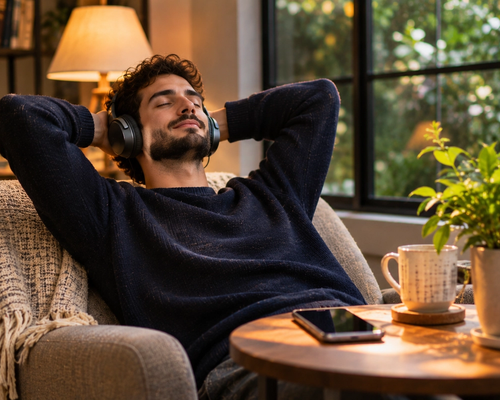
A morning with nowhere urgent to be. A lunch that lasts two hours. The ability to walk instead of rush. A weekend without obligations. Enough financial security to choose time over additional income. Enough confidence to leave some space in the calendar.
You cannot easily photograph that kind of wealth, which may be part of its appeal.
Slow Things Create Better Memories
Think about the moments from the last few years that you remember vividly. They are unlikely to include clearing your inbox quickly or successfully watching six short videos while waiting for something else.
Memory seems to prefer experiences with texture.
A long dinner. A road trip. A conversation that lasted until midnight. Getting lost somewhere. Cooking with someone. Sitting beside the sea after everyone else left. Walking through a city without knowing exactly where you were going.
These moments occupy time, and because they occupy time, we have a chance to actually be present inside them.
Maybe Faster Was Never the Same as Better
Speed is useful. Efficiency is useful. Convenience is useful. There is no need to pretend otherwise.
But they are tools, not values.
Some things should happen quickly. Emergency medicine should be fast. Internet connections should be fast. Airport security lines should absolutely be fast.
Other things lose something when we accelerate them.
Friendship. Food. Reading. Travel. Craft. Recovery. Conversation. Childhood. Falling in love. Learning something difficult. Watching someone grow.
Perhaps the slow things are quietly winning because we have spent enough time experiencing the alternative. We know what it feels like to have everything immediately available and still feel as though there is never enough time.
So we are beginning to protect the experiences that refuse to hurry.
Not because slower is always better.
But because some of the best things in life were never meant to be efficient.